01
Which data can be trusted
Ownership, completeness, update frequency and access are checked before building on top of a source.

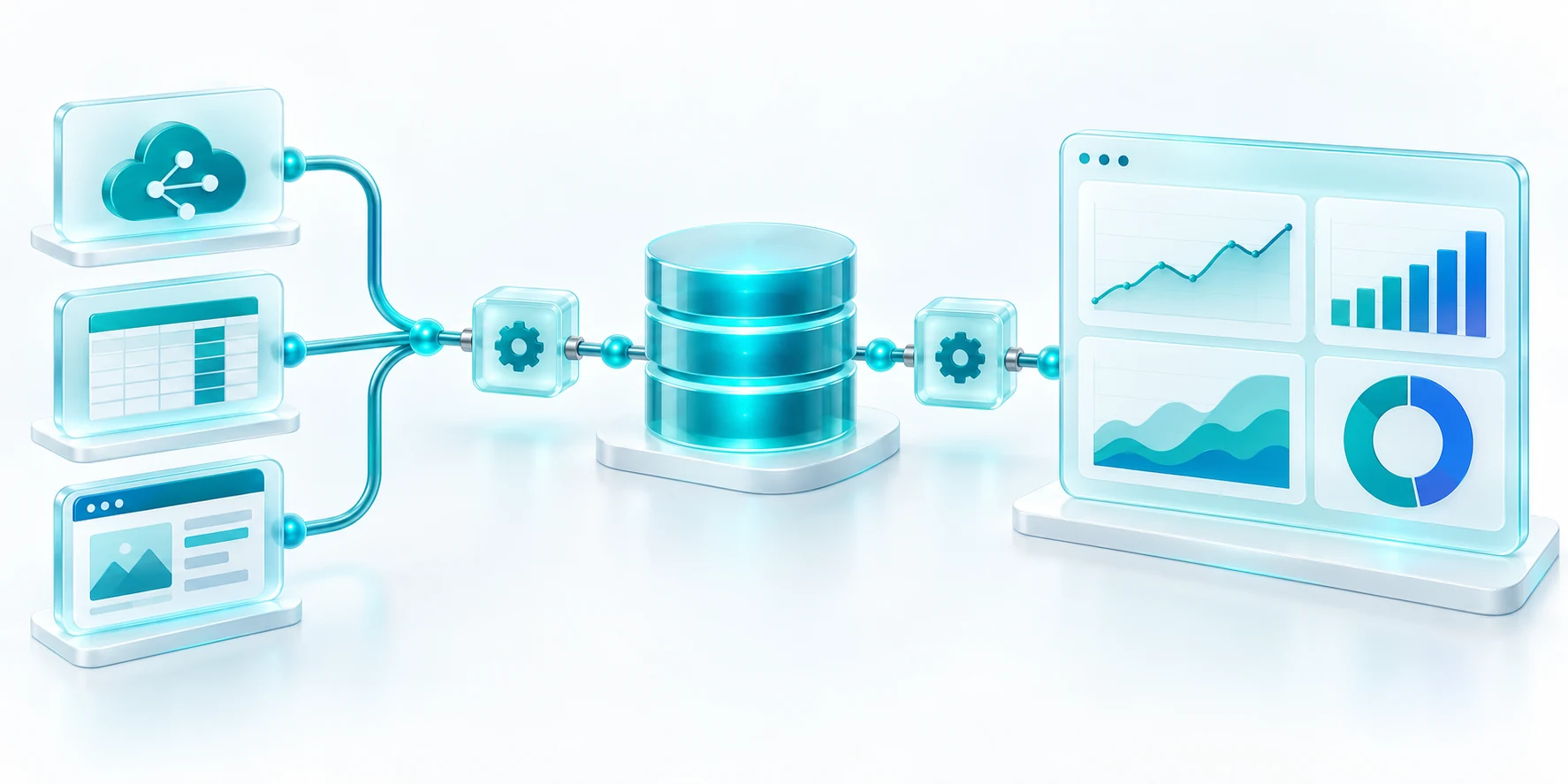
Data pipelines, reporting and focused AI applications with measurable inputs, outputs and review points.
Reports depend on manual preparation, useful data is scattered, or your team wants to test whether automation can help with a repeated task. The first step is to define a result that can be checked.
We begin with a decision, report or repeated task that needs improvement, then trace it back to the available data. A first implementation stays narrow enough to evaluate. For model-assisted work, we record failure cases and keep people in the process wherever judgement or accountability is required.
Identify the decision or task to improve and review available data.
Build a small working pipeline or application and test representative inputs.
Review the results and failure cases before agreeing a wider rollout.
Python supports data processing and model integration; Power BI supports operational reporting. Streaming and model frameworks are selected only where data volume, latency or the task calls for them.
Clear answers here prevent avoidable rework later.
Ownership, completeness, update frequency and access are checked before building on top of a source.
A useful measure and representative examples are agreed before expanding the solution.
Model-assisted work includes review points, exception handling and a way to correct the underlying process.
We examine the source data and agree how to judge the output. A reporting pipeline, document-processing workflow or retrieval application starts with a bounded use case and a review of errors, exceptions and human oversight.
 05
 Enterprise
Bringing sales and marketing data together for useful reporting.
Tell us about your current setup, the work ahead and any deadlines you need us to consider.